The Truth About Log Cabin Jobs: Salary, Skills, and Getting Started
Want to work with your hands and earn $59,500 a year or up to $48 per hour? Log cabin jobs could be your perfect career match. Our research shows these specialized construction roles pay well and give you the satisfaction of creating beautiful, lasting structures.
Log cabin jobs need unique skills that make them different from regular construction work. The builders put logs together, seal joints, and make sure everything stays strong—all while using time-tested building methods. You’ll need to know your way around tools, blueprints, and woodworking. Many people find this work deeply satisfying. The industry has plenty of room for growth, from entry-level positions at $18 an hour to skilled roles paying $30-$38 hourly.
Let’s take a closer look at how to start and grow in log cabin construction. We’ll cover the skills you need, what you can expect to earn, and the best training programs to get you started.
Types of Log Cabin Jobs You Can Apply For
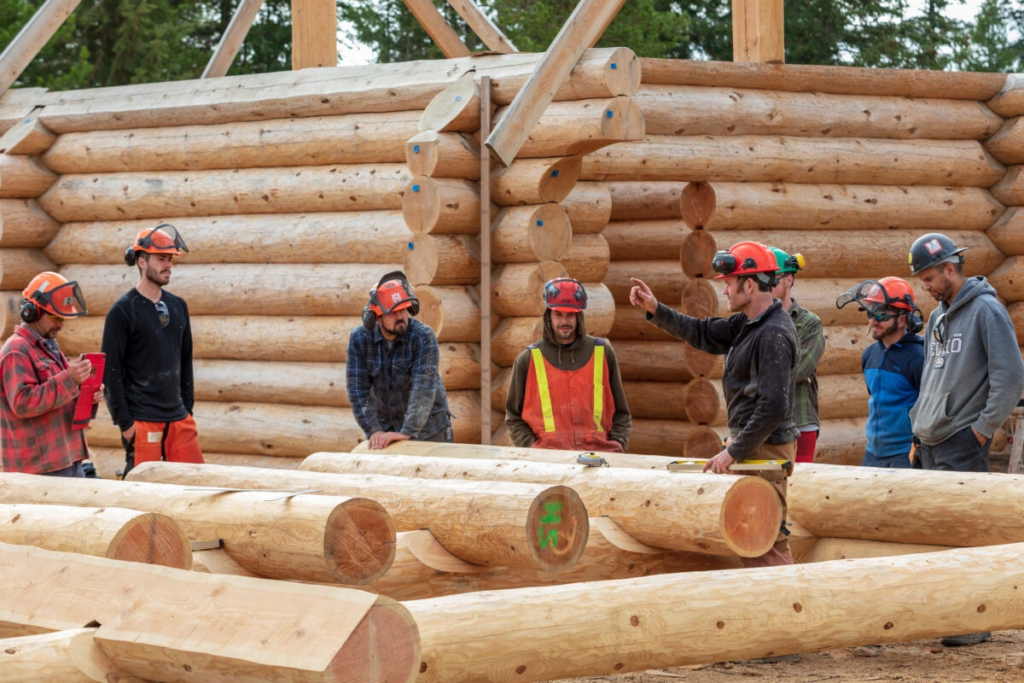
The log cabin industry has many specialized roles that need different skills and create unique career paths. These jobs go way beyond just cutting logs and include everything from hands-on construction to working directly with customers.
Carpenter and Log Home Builder
Log carpenters are the foundations of the industry. They craft and assemble log structures like homes, cabins, and outbuildings. These skilled professionals measure, cut, and shape logs, timbers, and wood components. They read 3D drawings and detailed joinery blueprints. Their work involves deciding proper log layouts, putting together log wall systems, and working with team members to meet quality standards and deadlines. Most builders work on projects and earn about $30 per hour for their skilled craftsmanship.
Maintenance and Repair Technician
Log cabin restoration specialists keep existing structures in great shape. These experts handle media blasting, power washing, log repair, staining, and sealing. You don’t need specific certifications, but most employers want people with 2+ years of commercial staining or painting experience. The technicians love “reviving an old log home or allowing homeowners to start enjoying their log homes for the first time in years”. Jobs can be seasonal (March-November) or full-time, based on location and what employers need.
Installer for Cabin Interiors
Interior installers add the final touches that make log structures feel like home. They put in windows, doors, siding, roofing, and cabin seats. Cabinet installers fit cupboards in kitchens, bathrooms, and other areas. This work needs skills with power tools and hand tools. Many cabinet installation jobs pay well, between $28-$35 per hour. This makes it one of the better-paying specialties in the log cabin industry.
Construction Foreman or Supervisor
Lead construction foremen talk directly with clients while managing the construction team. These supervisory positions need great leadership skills and detailed knowledge of log building techniques. Construction superintendents can earn $90,000-$150,000 yearly, with pay varying by location, experience, and project size. Foremen manage daily operations, handle resources, check quality standards, and coordinate the building process.
Sales and Customer Support Roles
Sales representatives help clients design their dream log homes without doing physical work. They guide clients through design, purchasing, manufacturing, and delivery while working with design teams. The job includes going to trade shows, showing log home systems, and finding new opportunities through phone, email, and video calls. The best dealers sell about fifty log homes each year. Some exceptional performers reach up to one hundred sales annually, which creates great earning potential through commissions.
Each career path has its own benefits. Some people love the hands-on satisfaction of building, while others enjoy building relationships in sales and customer service. These specialized roles are often more rewarding than regular construction jobs because log structures need unique craftsmanship.
Skills You Need to Succeed in Log Cabin Jobs
Success in log cabin construction needs a mix of traditional and modern skills. Log cabin building is different from regular construction because it needs special skills that blend old-world craftsmanship with technical knowledge. These core skills will substantially boost your value in this specialized field.
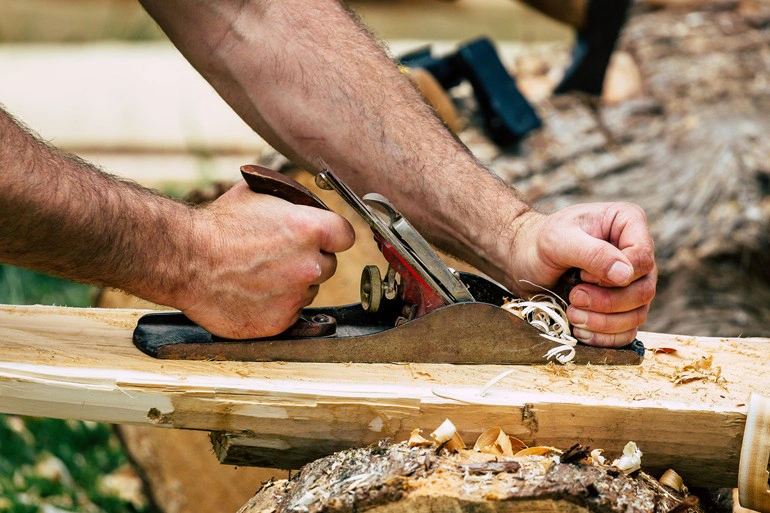
Simple carpentry and woodworking
Carpentry serves as the foundation of all log cabin building jobs. You’ll need to measure, cut, and shape logs with precision while understanding various wood properties. The best builders at companies like Pioneer Log Homes started their journey at age 16 and grew into world-class craftsmen. You must understand how logs fit together structurally and esthetically beyond simple woodworking.
Exceptional builders stand out by knowing how to select the perfect “character log” for specific architectural features. Knowledge of different wood species’ behavior—their shrinkage rates, insect resistance, and weather durability—is a great way to get insights when building homes that last generations.
Reading blueprints and construction plans
Reading log cabin blueprints is different from standard construction documents. Industry experts say a complete log home blueprint package has elevations showing exterior and interior walls, site drawings, foundation plans, and reflected ceiling details. Visualizing two-dimensional plans in three dimensions becomes vital when working with logs of irregular shapes and sizes.
Scale notations (typically 1/4-inch or 1/2-inch to the foot) and dimension markings help you position each log correctly within the structure. You must also recognize specialized symbols for electrical components, plumbing fixtures, and structural elements to coordinate work in all building disciplines.
Using hand and power tools safely
Tool safety is one of the most significant skills in log cabin construction. OSHA guidelines stress that you should never carry tools by their cords, keep work areas well-lit, and disconnect tools when not in use. Clean drills and sharp bits not only make work safer but also improve quality.
Specific techniques matter greatly too. You should maintain perfect alignment over screws and stand square to your work when using drills and drivers. This transfers force through your shoulder instead of your wrist and prevents injuries. Safety goggles, gloves, and appropriate footwear are must-haves when using power tools.
Teamwork and communication
Log cabin construction thrives on cooperation. Pioneer Log Homes believes that “teamwork makes all the difference” as crews carefully handcraft every detail. Complex assembly of massive timber structures needs effective communication, where crews must lift each beam and line up each joint with exceptional precision.
This collaborative spirit goes beyond the construction site. Many homeowners develop close relationships with building crews—some even cook meals for their builders. These work relationships often turn into friendships that enhance the project experience. Communication skills become extra valuable in an industry where craftsmanship and client satisfaction go hand in hand.
Physical strength and endurance
Physical fitness is the most basic requirement for log cabin jobs. The Bureau of Labor Statistics points out that logging workers “spend all their time outdoors, sometimes in poor weather and often in isolated areas”. This challenging environment demands both strength and stamina.
Job fitness needs several components—aerobic capacity, muscular strength, endurance, and flexibility. Strong workers can “lift and carry heavy loads with less fatigue or risk of injury,” while muscular endurance helps maintain performance during tiring tasks. Many employers suggest at least four weeks of training before taking work capacity tests. Your physical preparation should include work hardening—gradually increasing specific activities that prepare your body for handling logs and timber.
What You Can Expect to Earn
The money you can make in log cabin construction changes a lot based on your role and expertise. Your salary expectations should match the reality of this specialized field. Let’s break down what you can expect to earn at different stages of your career.
Entry-level positions: $15–$25/hour
Starting jobs in log cabin construction pay decent wages with plenty of room to grow. General construction laborers earn between $15.00 and $22.00 per hour. Log peelers start at $20.00 hourly and can make up to $30.00 per hour after just one month on the job. Most log cabin companies pay new workers $17.00 to $25.00 per hour, based on their skill level. Cox Log Homes pays their construction laborers about $19.69 hourly, which matches the national average.
Skilled roles: $25–$40/hour
Your earning power grows as you build experience and sharpen your skills. U.S. Log Home Builders make $22.82 per hour on average, while top performers (75th percentile) earn $25.48 or more. The best builders can earn up to $31.01 hourly. Residential building workers in all specialties earned $33.51 per hour as of September 2024. Job listings often show skilled positions paying $25.00-$33.00 per hour, depending on experience.
Supervisory roles: $60,000–$100,000/year
Management jobs offer the highest earnings in log cabin construction. A Cabin Equipment Supervisor in Illinois earns $78,792 per year on average, while senior supervisors with 8+ years of experience can make up to $96,909 yearly. Logging workers’ median annual wage reached $49,540 in May 2024. These figures often include benefits packages and bonuses that boost total pay.
Factors that affect pay: location, experience, employer
Your pay in log cabin jobs depends on several key factors. Workers in Denver, Phoenix, and other high-demand areas typically earn more. Experience makes the biggest difference – the gap between entry-level and senior positions can exceed $40,000 per year. Union membership can make a big difference too, with union workers starting at $20.00-$30.00 hourly versus lower rates for non-union jobs. Your certifications, work efficiency, and employer’s reputation also help determine your final pay.
Certifications and Training That Help You Stand Out
Success in the log cabin industry demands more than raw skills—the right credentials will set you apart from competitors. These qualifications have become valuable assets that help you stand out to potential employers as the field becomes more specialized.
OSHA 10 or 30 certification
Safety certifications open doors to construction sites. The OSHA 30-Hour Construction course targets construction workers who have safety responsibilities, such as foremen, job supervisors, and employers. Students must achieve a passing score of at least 70% to receive their certificate and a valid DOL/OSHA 30-Hour Card ships within two weeks. Entry-level positions require the OSHA 10-Hour Construction course that covers workplace hazard recognition, avoidance, and prevention. Students need at least two calendar days to complete this training because daily study time cannot exceed 7.5 hours.
Apprenticeship programs
Log construction offers structured pathways through formal apprenticeships. The Carpenters Training Program’s requirements include being 18 years old (17 with parent’s consent), physical capability to perform all work phases, and English reading proficiency. Students must complete 48 months, 4,800 work hours, and 612 hours of related instructional classes. Some aspiring builders connect with established professionals directly and offer their labor to secure apprenticeships.
On-the-job training opportunities
Practical experience remains the life-blood of log construction education. Many successful builders started their journey at age 16 and developed into master craftsmen. Short courses combined with strategic apprenticeships and professional builder volunteering create the most effective learning path.
Specialized log building courses
Traditional techniques come alive at dedicated log building schools. The International Association of Certified Home Inspectors offers a free online Log Home Inspection Course with 8 CE credit hours and a 100-question final exam. Students can dive deeper through hands-on workshops that teach scribing, peeling logs, ripping and flattening logs, cutting notches, and grooves. Companies like Backwoods Log Homes and experts such as Robert Chambers run specialized courses where students help build actual log structures.
How to Get Started in Log Cabin Building Jobs
Breaking into the log cabin construction industry needs a strategic approach and patience. The journey to become a successful log cabin builder combines hands-on experience, targeted job hunting, skill demonstration, and professional connections.
Start with general construction experience
Most professionals recommend getting general construction experience before specializing. Many successful log cabin builders started their careers in conventional carpentry or framing. Hands-on experience with foundations, structural engineering, and simple carpentry provides transferable skills. Construction sites teach you safe tool handling and building code compliance—knowledge that directly applies to log cabin construction.
Look for local log cabin companies hiring
Local log cabin companies often have job openings worth exploring. Some builders hire specifically to train future craftspeople they plan to employ. Lancaster Cabins provides steady, shop-based work with clear advancement paths. New hires typically help with framing walls, installing windows, doors, siding, and roofing.
Build a portfolio of woodworking or carpentry
Your woodworking projects should be well-documented to showcase your skills. Small, manageable projects demonstrate your abilities without financial risks. Construction drawings need careful reading and interpretation for accurate project completion. Photos of your finished work create a visual record that proves your capabilities.
Network with builders and mentors
The timber framing community welcomes connections through associations and online forums. Networking helps woodworking businesses thrive and opens doors to fresh opportunities and knowledge. A mentor can speed up your learning journey—experienced builders offer targeted feedback that accelerates progress. Schools like Pat Wolfe Log Building School or Great Lakes School of Log Building provide specialized training worth exploring.
Conclusion
Building log cabins is a career that blends old-world craftsmanship with today’s building methods. In this piece, we looked at different roles you can take on – from hands-on builders who make $15-40 per hour to supervisors who earn $60,000-100,000 yearly. It also covers everything you’ll need to succeed, especially carpentry skills, understanding blueprints, and physical stamina.
Your career growth depends on proper training and certification. OSHA safety credentials, specialized log building courses, and apprenticeships will improve your job prospects. Real-life experience is still the most valuable asset you can have.
Starting out might look tough, but entering the field becomes easier with a solid plan. You should start with basic construction work, create an impressive portfolio of woodworking projects, and connect with experienced professionals. Your patience will pay off substantially as you build specialized skills that set you apart.
Log cabin construction just needs more than basic carpentry knowledge. The satisfaction of creating beautiful, lasting structures makes the learning experience worth it. This growing industry welcomes committed people who want to learn traditional techniques while earning good money – whether they enjoy hands-on craftsmanship, leadership roles, or working with customers.
Becoming a skilled log home builder takes time and commitment. If you love working with natural materials and creating unique living spaces, few careers combine traditional craftsmanship, good pay, and lasting pride in your work like this one.
FAQs
Q1. What types of log cabin jobs are available in the industry? Log cabin jobs include roles such as carpenter and log home builder, maintenance and repair technician, installer for cabin interiors, construction foreman or supervisor, and sales and customer support positions. Each role requires different skills and offers unique opportunities within the log cabin construction field.
Q2. What skills are essential for success in log cabin construction? Key skills for log cabin construction include basic carpentry and woodworking, the ability to read blueprints and construction plans, safe use of hand and power tools, teamwork and communication skills, and physical strength and endurance. Mastering these skills can significantly increase your value in this specialized field.
Q3. How much can I expect to earn in a log cabin construction job? Earnings in log cabin construction vary based on experience and role. Entry-level positions typically pay $15-$25 per hour, skilled roles can earn $25-$40 per hour, and supervisory positions may offer annual salaries between $60,000 and $100,000. Factors like location, experience, and employer also influence pay rates.
Q4. What certifications or training can help me stand out in the log cabin industry? Valuable certifications and training for log cabin jobs include OSHA 10 or 30 certification, participation in apprenticeship programs, on-the-job training opportunities, and specialized log building courses. These credentials can enhance your marketability and demonstrate your commitment to the field.
Q5. How can I get started in a log cabin building career? To start a career in log cabin building, begin by gaining general construction experience, look for local log cabin companies that are hiring, build a portfolio of woodworking or carpentry projects, and network with established builders and potential mentors in the industry. Starting with these steps can help you gain the necessary skills and connections to enter the field.