Most Energy Efficient Insulation: Expert Guide for Cozy Cabins (2026)
Smart cabin owners can slash their heating and cooling costs by 40-60% by picking the right energy-efficient insulation. We know firsthand, as cabin owners,s that you need to keep comfortable temperatures without spending a fortune.
Lower utility bills help the right insulation pay for itself within a few years. The most energy-efficient insulation depends on several key factors – R-value ratings, your local climate, and how you plan to install it. Our top pick for 2025 is closed-cell spray foam insulation. This material delivers excellent thermal resistance and seals pesky air gaps to create a more comfortable living space.
Radiant barriers offer another powerful solution that reflects 97% of the sun’s heat. Your cabin stays up to 20 degrees cooler duringthe hot summer months. This piece breaks down the most energy-efficient insulation options for different areas of your cabin. You’ll learn everything needed to make smart choices that work for your budget while protecting the environment.
Why Insulation Matters for Cabins
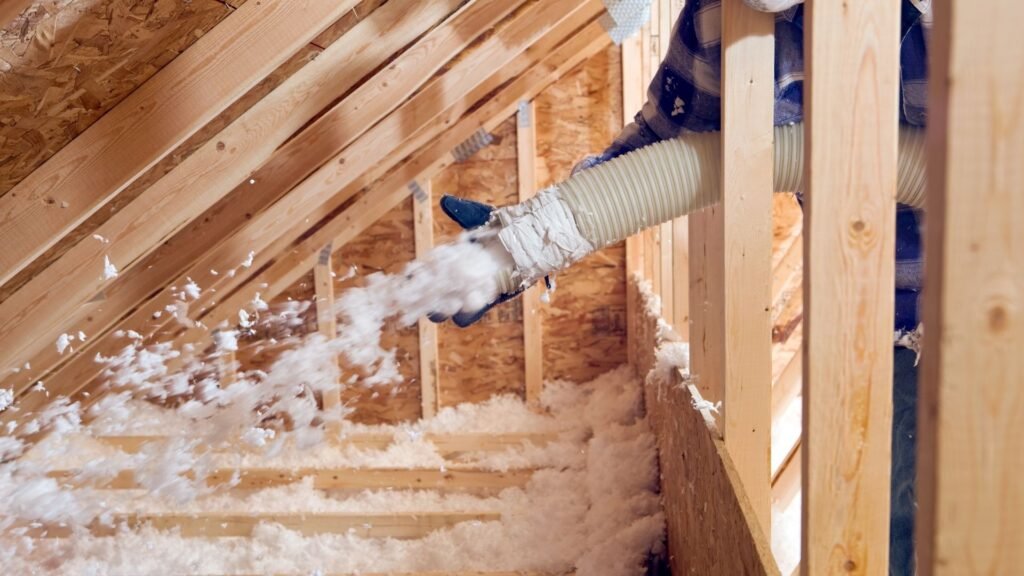
“Proper insulation helps regulate temperature year-round, keeping homes warm in winter and cool in summer while reducing strain on HVAC systems.” — Modernize, Home improvement and insulation services platform
Proper insulation forms the bedrock of an enjoyable cabin experience. The right insulation does more than save energy – it turns your retreat into a sanctuary that safeguards your investment and comfort as seasons change.
Comfort in all seasons
A beautiful cabin becomes unlivable in winter and suffocating in summer without good insulation. Quality insulation creates a thermal barrier that keeps indoor temperatures steady and prevents wild temperature swings. Your cabin’s natural properties work with this thermal mass – logs store heat during the day and release it slowly at night. You won’t wake up seeing your breath on cold mornings or sweat through summer afternoons anymore. Your cabin remains welcoming whatever the weather outside.
Preventing moisture and mold
Moisture threatens cabin longevity more than almost anything else. Spaces without insulation create temperature differences that cause condensation, which breeds mold, mildew, and structural decay. Proper insulation is a vital moisture barrier when you install it with the right ventilation. This protection keeps your cabin’s structure intact and maintains healthy indoor air. Mold that grows unchecked over time can destroy wood, causing costly structural repairs. The right insulation placement with vapor control keeps condensation at bay, which protects your cabin’s framework.
Reducing energy bills and system strain
Quality insulation’s financial benefits are substantial. Properly insulated cabins cut heating and cooling costs by 40-60%. The U.S. Department of Energy reports that good attic and basement insulation saves homeowners 15% on heating and cooling costs. Your HVAC system runs less often when temperatures stay stable, which reduces component wear. Less strain means fewer repairs, longer equipment life, and year-round comfort. Most cabin owners find their insulation investment pays off through reduced utility bills within a few years.
Understanding R-Values and Cabin Needs
R-value is the lifeblood measurement that shows how well insulation works in your cabin. This vital metric helps you choose the most energy-efficient insulation for your retreat.
What is R-value and why does it matters
R-value measures how well insulation resists heat flow. The higher the R-value, the better the insulating power. Your cabin’s envelope heat transfer resistance depends on this number. Wood alone provides minimal thermal resistance in log cabins—just R-1.41 per inch for softwoods. Your cabin’s walls might end up with a total R-value of 8 without proper insulation, which falls nowhere near recommended standards.
Recommended R-values for walls, floors, and roofs
Your cabin’s different areas just need varying levels of thermal protection. Expert recommendations for exterior walls range between R-13 and R-23, based on your location. Floors above unheated spaces like crawl spaces just need R-13 in warmer areas and R-38 in colder regions. Attic spaces and ceilings are a big deal, as it means that they need the highest protection—from R-30 in southern states to R-60 in northern regions. Cathedral ceilings create unique challenges, but still need significant insulation despite limited space.
How climate zones affect insulation needs
We determined appropriate insulation levels based on your cabin’s location. The U.S. Department of Energy’s eight climate zones range from Zone 1 (hottest) to Zone 8 (coldest). Cabins in northern states (Zones 5-7) just need higher R-values than southern regions. To cite an instance, see how a roof in Zone 3 needs R-38, while the same structure in Zone 7 requires R-60. Local building codes specify minimum requirements based on these climate designations. Your cabin’s elevation matters too—mountain cabins feel colder than valley locations in the same region and often need extra insulation.
Most Energy Efficient Insulation Materials for Cabins
“Mineral wool is highly heat-resistant and does not burn. It is often used as a fire barrier in multi-family housing and is an excellent choice for homeowners who prioritize safety.” — South Chicago Insulation, Professional insulation service provider
Your cabin’s energy efficiency, comfort, and long-term sustainability depend heavily on the insulation material you choose. Let’s get into the most energy-efficient insulation options for your retreat.
Closed-cell spray foam: best for air sealing and moisture
Closed-cell spray foam leads the pack of insulation materials with an impressive R-7 per inch. This dense material fills every crack and void as it expands after application. It creates an effective vapor barrier that stops air leaks. The material adds structural strength to your cabin and stays practically waterproof. Your cabin will get unmatched protection against harsh elements with closed-cell spray foam, but it comes at a cost – about five times more than fiberglass.
Mineral wool: fire-resistant and soundproof
Mineral wool stands out with its exceptional durability and fire resistance. The material can handle temperatures exceeding 1000°C without spreading flames. Made from volcanic rock or recycled slag, it keeps water out while letting trapped moisture escape. This means mineral wool keeps working even in humid cabin environments. The material stays stable through seasonal temperature changes with minimal expansion and contraction.
Rigid foam boards: high R-value per inch
Rigid foam insulation packs serious insulating power into a compact form – perfect for cabins where space matters. These dense boards deliver high R-values: typically R-5 per inch for XPS and up to R-28 for polyiso types. Unlike spray foam, these panels work through compactness rather than expansion. Remote cabins benefit from their excellent moisture resistance against the elements.
Blown-in cellulose: eco-friendly and dense-packed
Cellulose insulation uses 85% recycled materials and excels at filling odd spaces and tough-to-reach spots. You can have it blown in, spray-applied, or dense-packed based on your cabin’s needs. Dense-packed applications create a complete thermal blanket that cuts air infiltration and reduces sound by up to 60%. The material achieves R-3.7 per inch and supports your sustainability goals while delivering solid thermal performance.
Fiberglass batts: affordable and DIY-friendly
Fiberglass remains a go-to choice for its reliability and affordability. Standard batts reach about R-13 in a 2×4 wall, and you can get better performance with medium and high-density options. DIY enthusiasts appreciate how these pre-cut panels fit between wall studs and ceiling joists. Though not the most energy-efficient option, fiberglass gives you reliable thermal control at a reasonable price.
Natural options: wool, cotton, and cork
Natural insulations combine great sustainability with solid performance. Sheep’s wool manages moisture brilliantly and keeps insulating even after absorbing 35% of its weight in water. Cotton/denim insulation contains 85% post-consumer recycled material and absorbs sound effectively. Cork comes sustainably from oak bark and provides R-values of 3.6-4.0 per inch. It naturally fights off mold, mildew, and pests. These materials help create healthier indoor spaces by reducing chemical off-gassing.
Choosing the Right Insulation for Each Cabin Area
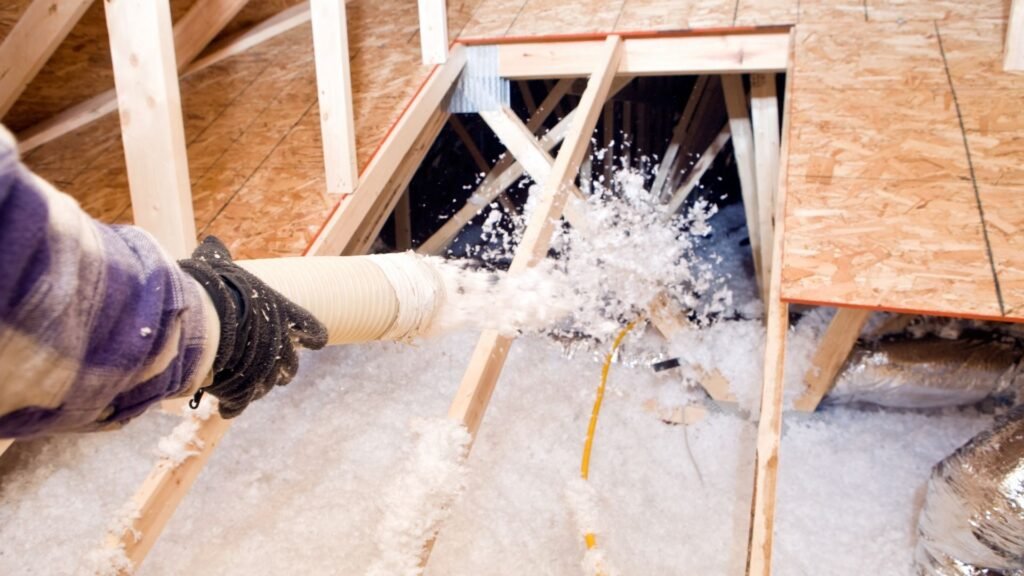
Your cabin needs strategic insulation placement based on each area’s unique challenges. The most energy-efficient insulation varies depending on where you place it in your structure.
Walls: interior vs. exterior insulation
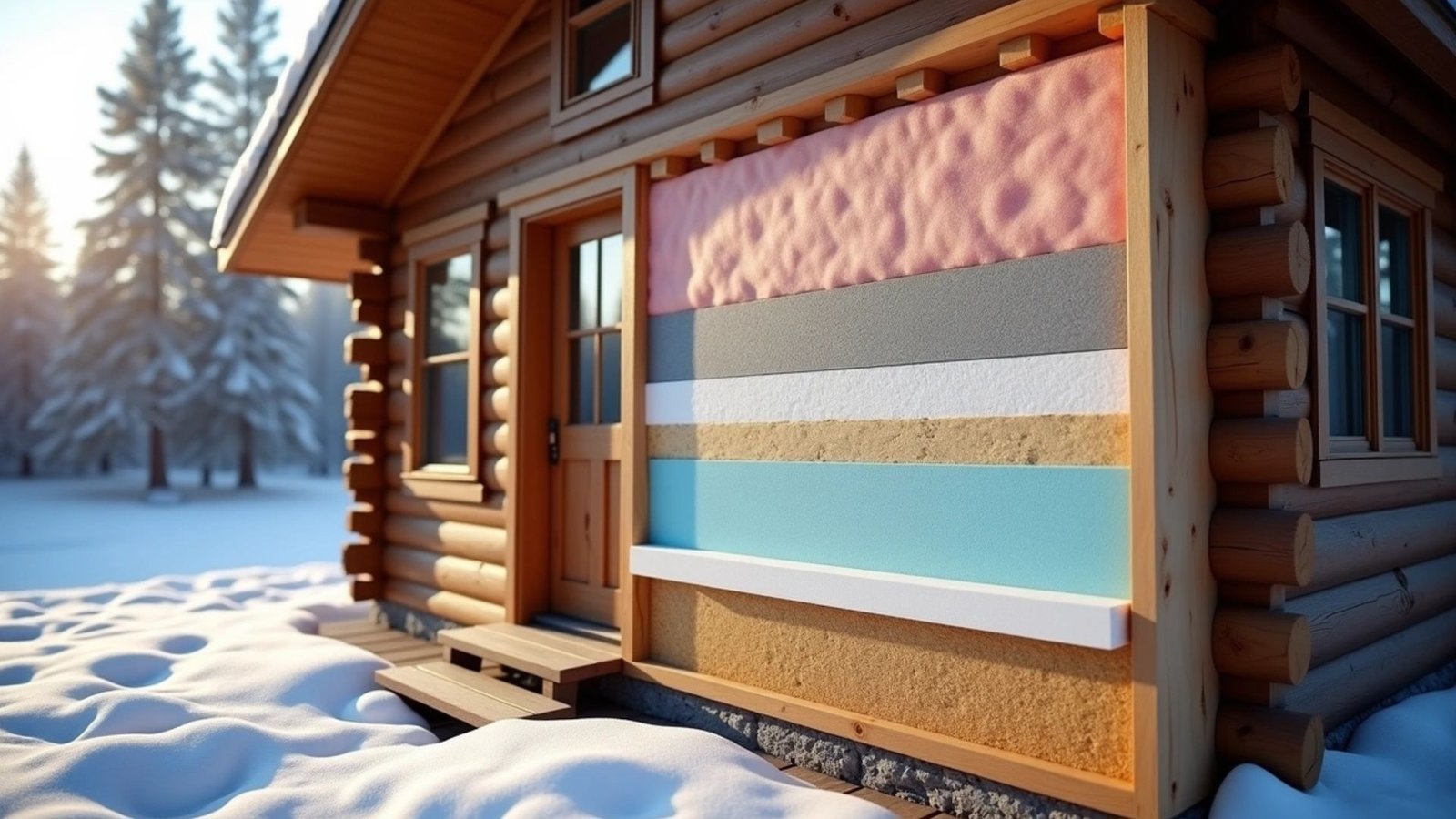
Interior wall insulation gives you more material choices at a lower cost. But this method takes away living space and won’t protect against water damage. Exterior insulation reduces thermal bridging and creates a moisture barrier while protecting waterproofing during backfilling. In stark comparison to this, exterior options usually cost more and might attract insects.
Floors and crawl spaces: moisture control strategies
You must control moisture when insulating floors. Crawl spaces without insulation create condensation that makes fiberglass sag and lose effectiveness. Rather than putting insulation between floor joists, experts suggest encapsulating the whole crawl space with a 6-mil vapor barrier that goes 12-18 inches up the walls. On top of that, rigid foam board along perimeter walls creates a space that stops moisture issues.
Attics and cathedral ceilings: preventing heat loss
Cathedral ceilings create special problems because isolated rafter cavities can suffer moisture damage. Dense-packed cellulose insulation at 3.0+ lbs per cubic foot fills gaps and limits air movement through these areas. You’ll get the best protection by keeping a continuous 1-inch air gap between insulation and the roof deck with baffles.
Foundations and basements: rigid foam and sealing
Polyisocyanurate or extruded polystyrene (XPS) rigid foam makes excellent foundation insulation because it resists moisture penetration. Areas with termites should have a 3-inch inspection strip at the foundation wall. Note that exterior foundation insulation needs protection against insects and physical damage through protective boards or panels.
Conclusion
The right insulation can reshape your cabin from a simple retreat into a year-round sanctuary. This piece shows how good insulation cuts energy costs and creates a more comfortable living space, whatever the outside temperature.
Your cabin’s climate plays the most vital role in picking insulation materials. The location determines appropriate R-values – northern zones need higher ratings than southern regions. Each cabin area needs its own approach, as walls work better with different solutions than attics, floors, or foundations.
Your choice of materials ended up being about a balance between performance, budget, and personal priorities. Closed-cell spray foam gives you unmatched thermal resistance and moisture protection at a higher cost than other options. Natural choices like wool and cork deliver solid insulation with environmental benefits. New cabin owners often start with budget-friendly fiberglass while they plan to upgrade to better materials later.
Note that even small insulation upgrades bring big benefits. Your attic or foundation improvements can make a huge difference in comfort and utility bills. Quality insulation protects your cabin investment for decades by stopping moisture damage and making the structure last longer.
Every cabin needs proper insulation – not just to save energy but to give you that irreplaceable feeling of coziness, whatever Mother Nature throws your way. Your perfectly insulated cabin is waiting for you!