How Much Firewood Do You Need for Your Cabin This Winter? (Cords, Costs, and a Simple Formula)
If you heat a cabin with wood, the end of October is decision time. Suppliers’ best-seasoned wood is going fast, prices tend to rise as the first cold snaps hit, and green wood bought in December won’t be dry enough to burn well until next year. The question every cabin owner asks this time of year is simple: how much firewood do I actually need?
The honest answer depends on your cabin’s size, your climate, how often you’re there, what you burn it in, and what species you buy. The good news is that you can turn those variables into a solid estimate in about five minutes. Here’s how.
Key Takeaways
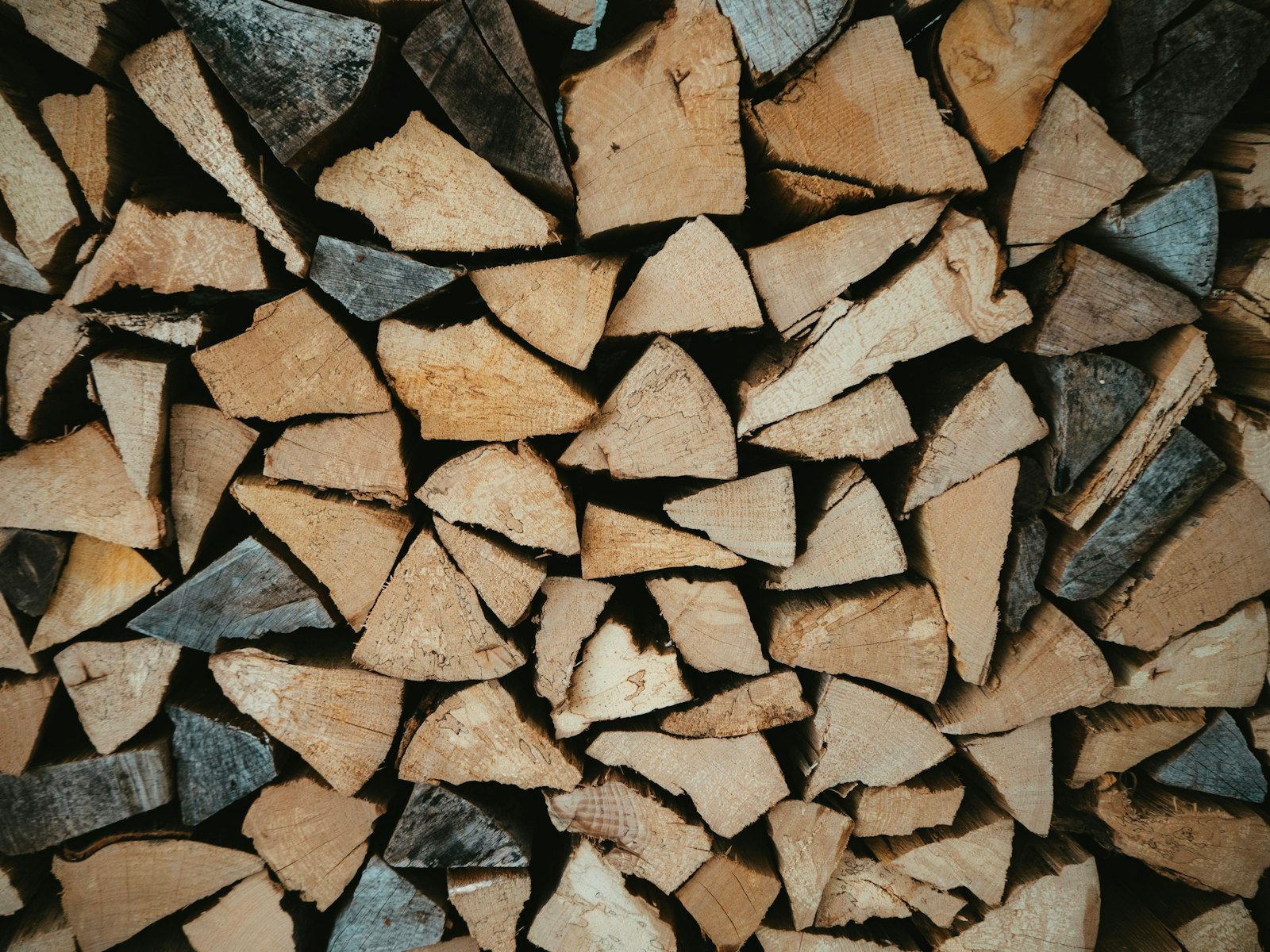
- A full cord is 128 cubic feet (4 ft high × 4 ft deep × 8 ft long). A “face cord” or “rick” is usually only about a third of that.
- Most full-time cabins burn 1 to 5 cords a winter, depending on size and climate. Very cold regions and larger cabins can need more.
- Species matters. A cord of oak or hickory holds roughly 50–70% more heat than a cord of pine.
- Your stove matters even more. An EPA-certified stove can get three to five times more heat from the same wood as an open fireplace.
- Dry wood is non-negotiable. Aim for 20% moisture or less. Wet wood wastes heat and builds creosote.
- Seasoned hardwood runs about $250–$400 a cord delivered in most of the U.S. in 2026, with wide regional swings.
First, Know Your Units: Cord vs. Face Cord vs. “Truckload”
Before you can calculate how much wood you need, you need to know what you’re buying. Firewood terminology is a mess, and sellers don’t always use it consistently.
| Unit | Dimensions | Volume | What to Know |
|---|---|---|---|
| Full cord | 4 ft × 4 ft × 8 ft, tightly stacked | 128 cu ft | The only standard legal unit in most states |
| Face cord / rick | 4 ft × 8 ft × one piece length | About 43 cu ft with 16-inch pieces | Roughly 1/3 of a full cord; depth varies by piece length |
| Half cord | 4 ft × 4 ft × 4 ft | 64 cu ft | Usually costs more than half the price of a full cord |
| “Truckload” | Whatever fits | Varies widely | Not a standard measure; a full-size pickup bed holds roughly a third to a half cord stacked |
| Bundle | Shrink-wrapped at a store | Under 1 cu ft | Fine for a weekend fire pit; terrible value for heating |
Always ask the seller to quote in full cords (or clearly stated fractions of a cord), and measure the stack before you pay. Loosely thrown wood takes up more space than stacked wood, so a heaped pickup bed contains less than it looks like.
The Simple Formula for How Much Firewood You Need
Here’s the core math. Don’t worry, there’s a quick-reference table below if you’d rather skip it.
Cords needed = (Cabin sq ft × Seasonal heat need per sq ft) ÷ (BTUs per cord × Appliance efficiency)
Then add a 20–25% buffer for a colder-than-normal winter, wood that isn’t quite as dry as promised, and the inevitable extra fires on holiday weekends.
Step 1: Estimate Your Seasonal Heat Need
This is the total heat your cabin loses over a heating season, expressed per square foot. It depends mostly on climate and on how tight and well-insulated the cabin is. Log cabins with good chinking and a well-insulated roof fall toward the low end of each range; drafty or older cabins land at the high end.
| Climate | Example Areas | Heat Need per Sq Ft per Season |
|---|---|---|
| Mild | Gulf Coast, low-elevation South, coastal California | 15,000–20,000 BTU |
| Moderate | Mid-Atlantic, Virginia, Tennessee, the Ozarks | 25,000–35,000 BTU |
| Cold | New England, Great Lakes, Rocky Mountain foothills | 40,000–55,000 BTU |
| Very cold | Northern Minnesota, northern Maine, high mountain sites | 55,000–75,000 BTU |
These are planning numbers, not engineering numbers. If you’ve already lived through a winter in your cabin, your own past wood use (or propane or electric bills) beats any rule of thumb.
Step 2: Know What Your Wood Is Worth in BTUs
Firewood is sold by volume, but heat comes from wood mass, and dense hardwoods pack a lot more mass into a cord. Approximate heat content for seasoned wood:
| Species | Approx. Million BTU per Cord | Notes |
|---|---|---|
| Hickory | 25–28 | Top-tier heat; slow to season |
| White oak / red oak | 24–26 | The classic cabin wood; needs a full year or more to dry |
| Sugar (hard) maple, beech | 24 | Excellent; ask whether “maple” means hard or soft |
| White ash | 23–24 | Seasons faster than oak |
| Black cherry, birch | 19–21 | Good all-around; birch bark is great for starting fires |
| Soft maple (red, silver) | 18–19 | Respectable, cheaper |
| Douglas fir | 20–26 | The go-to in the Pacific Northwest |
| Pine, spruce, hemlock | 14–17 | Lights fast, burns fast; best for kindling and shoulder seasons |
If you’re buying “mixed hardwood,” figure about 20–22 million BTU per cord.
Step 3: Account for What You’re Burning It In
This is the factor most people overlook, and it swings the answer more than anything else.
- Open masonry fireplace: roughly 10–20% efficient. Most of the heat goes up the chimney, and it can pull warm air out of the room. Fine for ambiance; poor as a primary heat source.
- Older, non-certified wood stove: roughly 40–55%.
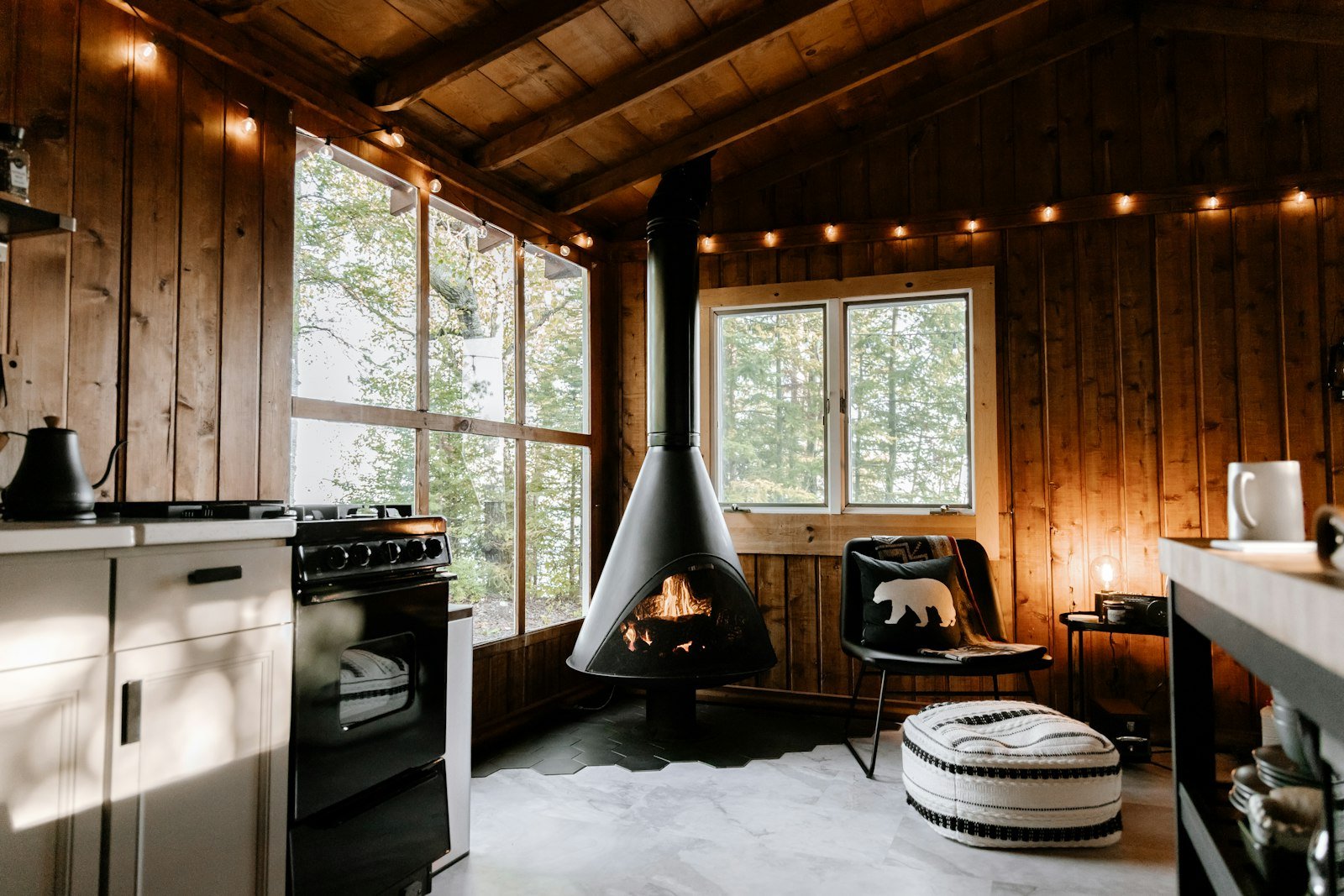
- EPA-certified wood stove or fireplace insert: roughly 65–80%.
In other words, a cabin heated by an open fireplace can burn three to five times more wood than the same cabin with a modern stove. If you’re still weighing a stove against other options, our wood stove vs. space heater cost comparison walks through the numbers.
Quick-Reference Chart: Cords per Winter for Full-Time Use
This chart assumes a cabin occupied all winter, mixed hardwood (about 22 million BTU per cord), and an EPA-certified stove at about 70% efficiency. It does not include the 20–25% safety buffer, so round up when you order.
| Cabin Size | Mild | Moderate | Cold | Very Cold |
|---|---|---|---|---|
| 400 sq ft | ½ cord | ½–1 cord | 1–1½ cords | 1½–2 cords |
| 800 sq ft | 1 cord | 1½–2 cords | 2–3 cords | 3–4 cords |
| 1,200 sq ft | 1–1½ cords | 2–3 cords | 3–4½ cords | 4½–6 cords |
| 1,600 sq ft | 1½–2 cords | 2½–3½ cords | 4–6 cords | 6–8 cords |
Adjustments: burning mostly oak or hickory, reduce by about 10–15%. Burning mostly pine or other softwood, increase by about 30–40%. Using an older stove, increase by about 30–50%. Heating only with an open fireplace, the chart doesn’t really apply; expect several times these amounts, or plan on a different primary heat source.
Two Worked Examples
Example 1: Full-Time 800 Sq Ft Cabin in Central Virginia
- Heat need: 800 sq ft × 30,000 BTU (moderate climate) = 24 million BTU
- Usable heat per cord: oak at 24 million BTU × 70% stove efficiency = 16.8 million BTU
- Base estimate: 24 ÷ 16.8 = about 1.4 cords
- Add a 25% buffer: about 1.8 cords → order 2 full cords
Example 2: Weekend 600 Sq Ft Cabin in Northern Michigan
Weekend cabins are trickier, because you’re only burning wood part of the time, but every visit starts with heating cold logs and furniture back up from 45 or 50 degrees.
- Full-season heat need: 600 sq ft × 47,500 BTU (cold climate) = 28.5 million BTU
- Occupied about 40% of the heating season: 28.5 × 0.40 = 11.4 million BTU
- Add about 25% for cold-start warm-ups each visit: about 14.3 million BTU
- Usable heat per cord: mixed hardwood at 22 million × 70% = 15.4 million BTU
- Base estimate: 14.3 ÷ 15.4 = about 0.9 cord; with a buffer, order 1 to 1¼ cords
(This assumes a separate propane or electric heater keeps the cabin above freezing between visits. If wood is your only heat and the cabin sits cold, protect the plumbing; see our guide to preparing your log cabin for winter.)
What Firewood Costs in 2026
Firewood is a local product, so prices vary a lot by region and species. As a general guide for the 2026–2027 heating season:
| Purchase | Typical Price | Notes |
|---|---|---|
| Full cord, seasoned mixed hardwood | $250–$400 delivered | National range runs roughly $150–$500+ |
| Full cord, softwood | $150–$300 | Cheaper per cord, but less heat per cord |
| Kiln-dried hardwood | Roughly 30–50% more than seasoned | Ready to burn on delivery; useful if you’re buying late |
| Face cord / rick | $75–$200 | Confirm the piece length so you know the true volume |
| Stacking service | About $50–$100 per cord | Many sellers dump the load in the driveway unless you pay extra |
Using Example 1 above, two cords of seasoned oak would cost roughly $500–$800 for the whole winter in much of Virginia. To compare that against propane or electric heat, convert everything to cost per million BTU of delivered heat: price per cord ÷ (BTU per cord × efficiency). At $300 a cord, oak burned in a 70%-efficient stove works out to roughly $18 per million BTU of usable heat.
Prices typically rise as demand peaks in late fall and winter, so ordering now, before Thanksgiving, usually beats ordering in January.
How to Make Sure You’re Buying Dry Wood
All the math above assumes properly seasoned wood. The EPA’s Burn Wise program recommends burning wood with a moisture content of 20% or less. Freshly cut wood can hold around half its weight in water, and every bit of that water has to be boiled off in your stove before the wood gives you useful heat. Wet wood also smolders, smokes, and lays down creosote in the chimney.
- Buy a moisture meter. Basic models cost around $20–$40. Split a piece from the middle of the load and test the freshly exposed face, not the end grain or the outside.
- Look and listen. Seasoned wood is lighter, often grayer or darker on the ends, shows cracks (checks) in the end grain, and makes a sharp, hollow knock when two pieces are struck together.
- Ask when it was split. “Seasoned” isn’t a regulated word. Hardwoods like oak usually need a year or more after splitting to dry; softwoods dry faster.
- If you’re buying late, kiln-dried wood or a smaller order of truly dry wood to get through winter (plus green wood to season for next year) is often the smarter play.
Storing Firewood Around a Log Cabin
Log cabins need a little more care here than stick-built houses, because a woodpile against the walls holds moisture against the logs and invites the pests you least want in a log home.
- Keep the main stack away from the cabin. At least 20 feet is a good rule, and 30 feet or more if you’re in a wildfire-prone area.
- Get it off the ground. Use pallets, rails, or a simple rack so air moves under the stack and the bottom row doesn’t rot.
- Cover the top, not the sides. A roof or tarp over the top keeps rain and snow off; open sides let it keep drying.
- Stack in single rows with the split side down and some space between rows if you have more than one.
- Bring in only a day or two’s worth. A small indoor rack or porch box keeps wood handy without moving bugs and mice inside.
For more on keeping mice, carpenter ants, and other uninvited guests out this time of year, see our fall pest-proofing guide for log cabins.
Don’t Forget the Chimney
Before you burn through those cords, have the chimney or stovepipe inspected and swept if it’s due. The National Fire Protection Association recommends an inspection at least once a year. Burning dry wood helps a lot, but even good wood leaves some creosote behind, and a cabin full of wood is the last place you want a chimney fire.
Frequently Asked Questions
How long does one cord of wood last?
For a small, well-sealed cabin heated full-time with a modern stove in a moderate climate, one cord might last six to ten weeks of steady burning. For occasional evening fires, it can last a full season or more. Use the formula above for your own situation.
How much does a cord of wood weigh?
A lot. A cord of dry oak weighs roughly 3,500–4,000 pounds, and green hardwood can weigh considerably more. Don’t try to haul a full cord in a half-ton pickup in one trip.
Can I heat a cabin with pine?
Yes. Dry pine burns cleanly in a good stove. The myth that pine alone causes chimney fires comes mostly from burning it wet. You’ll simply need more of it, roughly 30–40% more by volume than mixed hardwood, and you’ll be loading the stove more often.
Is it too late to buy firewood for this winter?
Not if you buy smart. Order now, insist on a moisture reading of 20% or less, and consider kiln-dried wood if seasoned wood is scarce in your area. Then buy next year’s supply green in late winter or spring so it has a full summer to dry.
The Bottom Line
For most cabin owners, the answer to “how much firewood do I need?” lands somewhere between one and five cords, but your cabin’s size, climate, stove, and wood species can push it well outside that range. Run the formula once, add a buffer, and order now while dry wood is still easy to find. Your future self, sitting by the stove in February with a full woodpile outside, will thank you.
Still planning your cabin? Heating is one of many ongoing costs worth budgeting from the start. Try our free Cabin Calculator to estimate what it will take to build your log cabin, or grab the free log cabin budget spreadsheet to track every line item.
Join the Conversation
How many cords does your cabin go through in a typical winter, and what’s your favorite firewood species? Share your numbers in the comments; real-world data from other cabin owners is the best calibration there is.